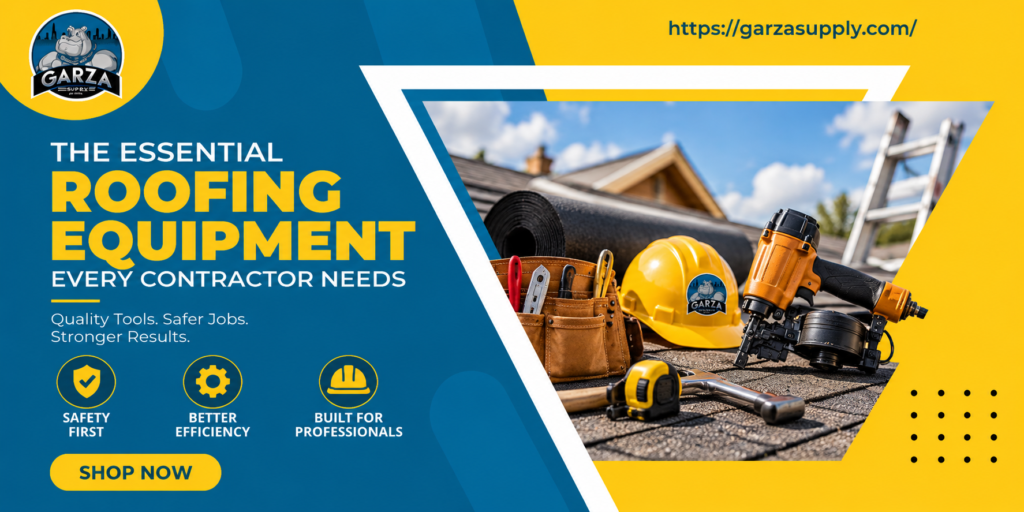
Roofing is a demanding profession that requires technical skills, precision, and reliable equipment. Whether you are an experienced roofing contractor or just starting in the industry, having the right roofing tools and equipment is essential for completing projects safely, efficiently, and professionally.
From personal protective equipment to specialized installation tools, every item plays an important role in improving productivity and maintaining quality workmanship. In this guide, we explore the essential roofing equipment every contractor should consider for residential and commercial roofing projects.
Safety should always be the top priority on every roofing job site. Working at heights involves significant risks, making appropriate personal protective equipment (PPE) essential.
Important safety equipment includes:
Contractors should select equipment appropriate for the specific job site and follow applicable workplace safety requirements.
A reliable roofing ladder provides access to elevated work areas and helps contractors transport tools and materials safely. Extension ladders are commonly used for residential and commercial roofing projects.
When choosing a roofing ladder, consider its load capacity, length, stability, and suitability for the working environment. Non-slip rungs and appropriate ladder accessories can improve stability when used correctly.
Always position ladders on stable ground, secure them as required, and follow the manufacturer’s instructions and applicable ladder safety standards.
Roofing nail guns help contractors install shingles and other compatible roofing materials efficiently. These tools can improve productivity by driving fasteners consistently when properly adjusted and operated.
When selecting a roofing nail gun, consider its compatibility with the roofing material, fastener specifications, operating pressure, and ease of maintenance.
Using the correct fasteners and following the roofing manufacturer’s installation instructions helps ensure reliable attachment and long-term roof performance.
Accurate cutting is essential for achieving clean edges, proper alignment, and professional-looking roofing installations.
Utility knives are useful for trimming asphalt shingles, underlayment, and other compatible materials. Specialized shingle cutters and roofing shears can help contractors complete repetitive cutting tasks more efficiently.
Keep cutting tools sharp, inspect them regularly, and use appropriate protective equipment to reduce the risk of injury.
Roofing underlayment provides an additional protective layer beneath the primary roofing material. Depending on the roofing system, contractors may use asphalt-saturated felt or synthetic underlayment.
These materials can help protect the roof deck from moisture during installation and provide secondary protection against water intrusion when properly installed.
Before selecting underlayment, consider the roof slope, roofing material, local building codes, climate conditions, and manufacturer requirements.
Moving roofing materials across a job site can be physically demanding, particularly on large commercial roofs. Roof carts and suitable material-handling equipment help transport supplies more efficiently.
Depending on the design, roof carts may be used to move shingles, tools, and other materials across compatible roof surfaces.
Always verify the cart’s load capacity, wheel design, and suitability for the roof type. Secure materials properly and avoid overloading equipment, especially on sloped roofs.
Keeping the job site clean and protecting surrounding property are important parts of professional roofing work.
Heavy-duty tarps and drop cloths help collect debris, protect landscaping, and reduce the risk of damage to nearby surfaces during roof removal and installation.
Choose durable materials suited to the job site, and secure tarps appropriately so they do not become tripping hazards or create wind-related risks.
Even with modern power tools, contractors still rely on dependable hand tools for precise installation, adjustments, and repairs.
Essential roofing hand tools include:
Maintaining organized, high-quality hand tools helps contractors work more efficiently and achieve consistent results.
Commercial roofing projects often involve plumbing vents, HVAC piping, electrical conduits, and other rooftop equipment.
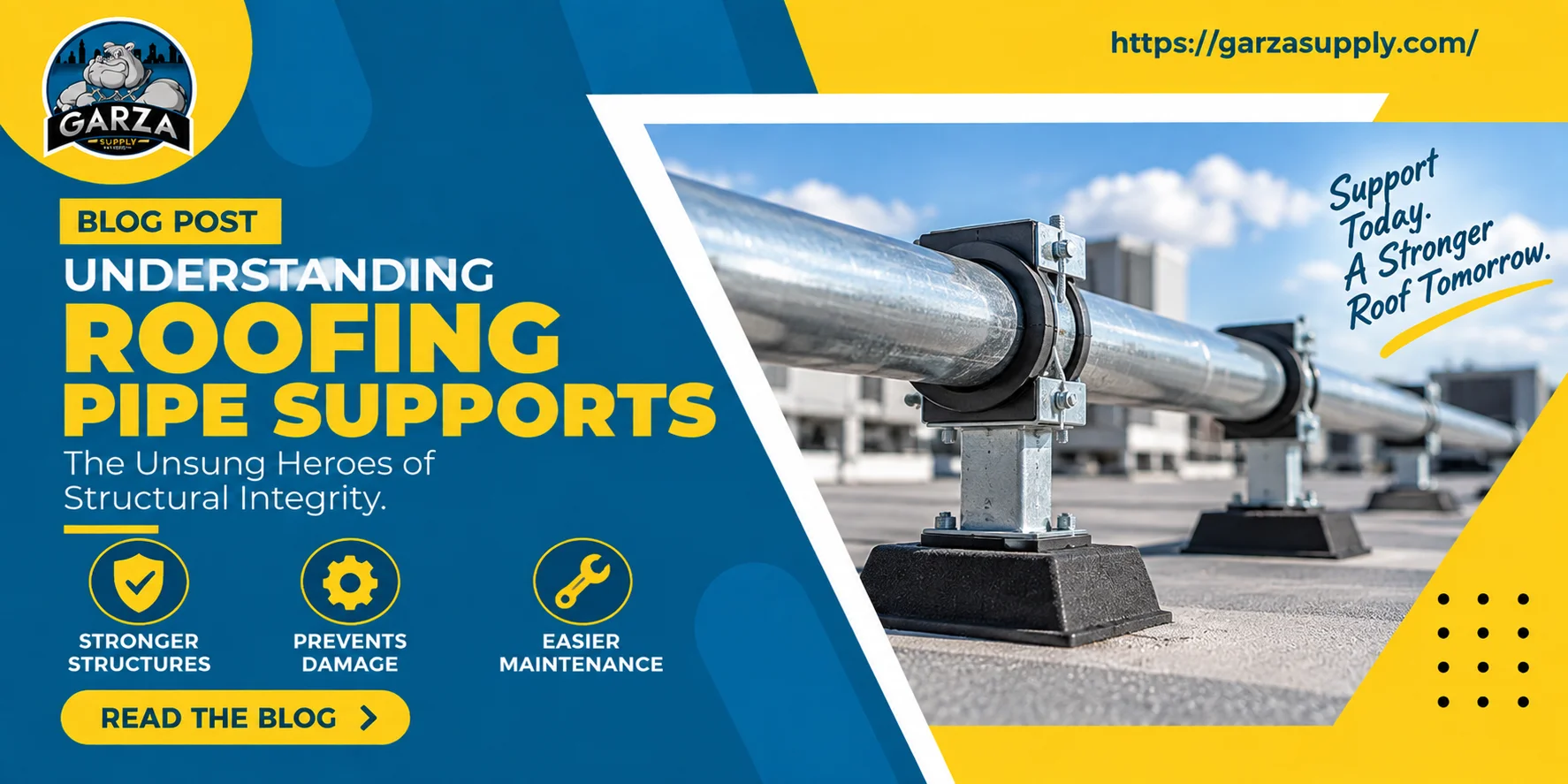
Roofing pipe supports help stabilize compatible piping systems while providing separation between pipes and the roof surface. Choosing appropriate supports can help protect roofing materials, maintain pipe alignment, and support organized rooftop installations.
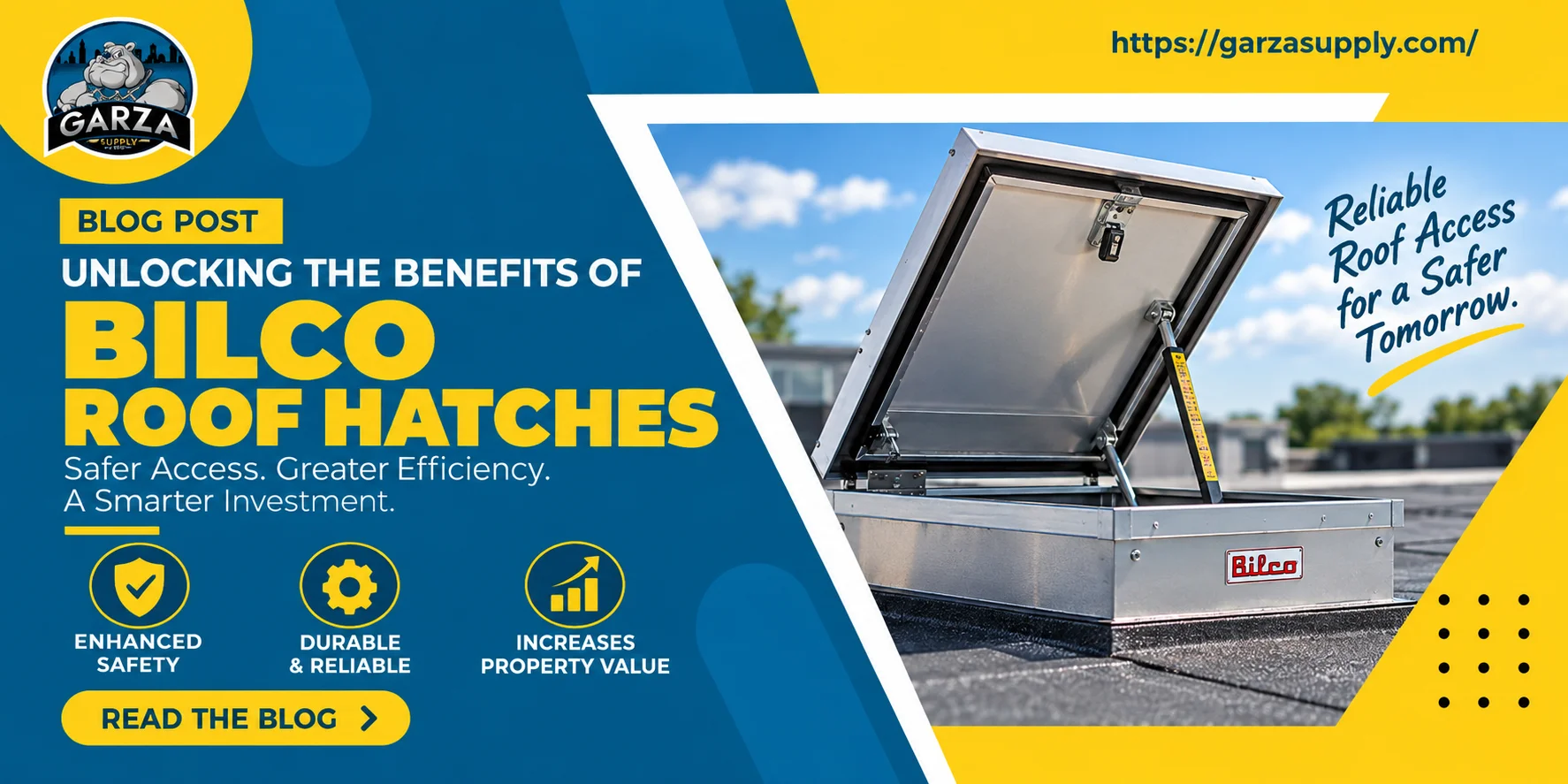
Contractors should also consider roof access hatches, flashing accessories, drainage components, and other specialized roofing products according to the project’s requirements.
Having the right roofing equipment is essential for improving productivity, maintaining safety, and delivering quality workmanship. From protective gear and ladders to nail guns, cutting tools, underlayment, and material-handling equipment, each item contributes to a more organized and efficient roofing project.
The best equipment choices depend on the roofing material, building type, project size, and working conditions. Regularly inspecting tools, maintaining equipment, and following manufacturer instructions can help contractors achieve dependable results.
Looking for quality roofing equipment and supplies? Contact Garza Supply to explore roofing products for your next residential or commercial project. Choosing the right tools and materials can help you work more efficiently and deliver professional results.


Follow Us